A humanitarian chatbot, born in the field
Born of a very concrete problem
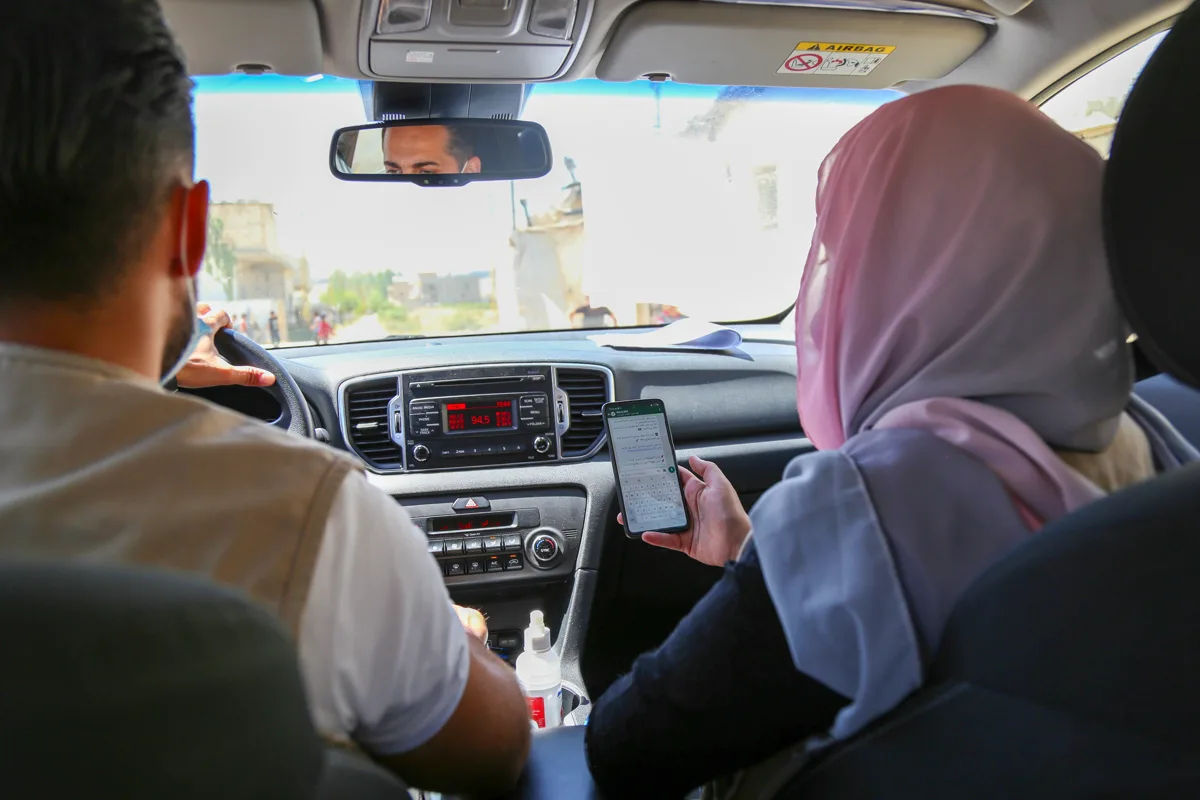
Maya coordinates MEAL activities for SOLIDARITÉS INTERNATIONAL in Lebanon. Her team: three officers. Her sites: more than three hundred. Every week she needs to know whether distributions happened, whether families received what was planned, whether anyone has a complaint. That used to mean hundreds of phone calls and entire days on the hotline. In Lebanon, in 2020, the SOLIS Bot was precisely built to answer that problem. Available on WhatsApp, the most widely used messaging platform among the communities we support, the SOLIS Bot provides informations, issues alerts, collects data and listens, in both directions, at no cost for affected communities.
Our conviction: communicating is already helping
In a crisis, knowing where to find safe water, when the distribution takes place or how to report abuse is not a convenience: it is aid, every bit as much as a kit or a meal. The SOLIS bot is designed so that this aid reaches everyone: voice messages for people who cannot read, every language covered, SMS fallback where the internet fails. And one absolute rule: every message is written and approved by humanitarian teams. No generative AI ever faces a beneficiary.
A shared tool, not a walled product
In Lebanon, CARE, Nabad for Development, the Lebanon Reforestation Initiative, Terre des Hommes and SOLIDARITÉS INTERNATIONAL each run their own bot on the same platform: dedicated number, tailored content, shared infrastructure costs. This multi-organisation model, backed by Twilio, the GSMA and our institutional donors, supported more than 250,000 people in 2025, and freed up the equivalent of 22 full-time positions capacity for information sharing and data collection activities.
SOLIDARITÉS INTERNATIONAL, grounded in the field
Saving lives, changing lives: since 1980, SOLIDARITÉS INTERNATIONAL has assisted people affected by conflict and violence, epidemics, natural and climate-related disasters, and economic collapse. Its teams respond to emergencies by meeting people's most vital needs, food, water, shelter and hygiene, while building long-term solutions that restore sustainable access to water, sanitation, hygiene, diversified livelihoods and safe housing. It always acts at the request of affected populations, in cooperation with local partners, and upholds the humanitarian principles of humanity, independence, impartiality and neutrality. According to its latest key figures, 5.6 million people were helped, and 95% of its resources go directly to affected populations. Its field teams, mostly hired locally, bring the SOLIS Bot something no software vendor can: real, first-hand knowledge of the field, including in the hardest-to-reach areas, and an uncompromising duty of accountability to the people who use it.